
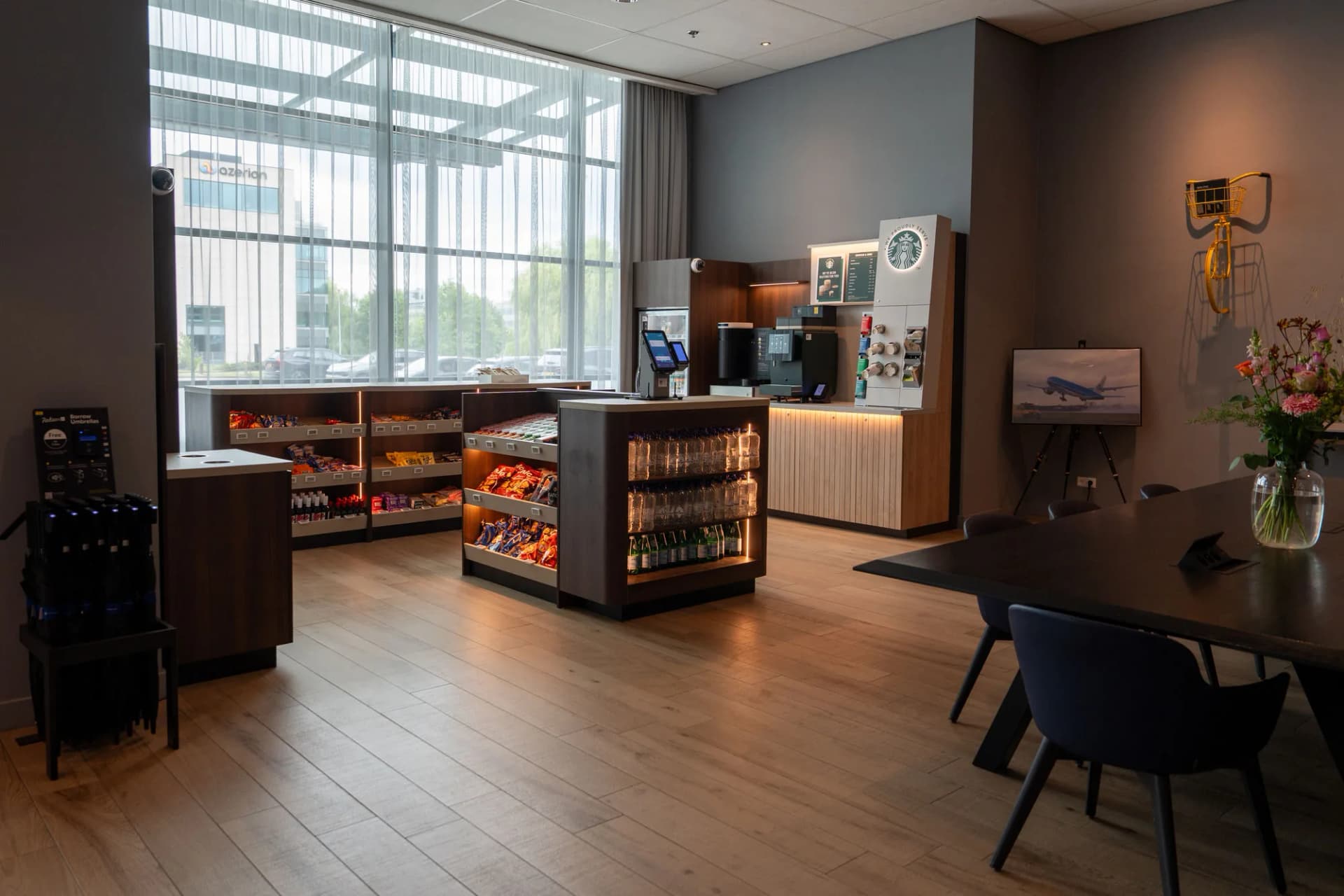
What is grab & go in a hotel?
Grab & go means choosing food or drinks, paying and taking them away. In a hotel, this shop concept relies on clear product displays, an understandable payment step and a practical route through the lobby. This guide helps you assess the layout and facilities of a grab-and-go hotel shop.
A lobby shop describes the location; a micro market or mini market describes the retail format. A hotel convenience store can combine shelves, chilled products and a self-service checkout. A smart fridge is another format, with a different way to access and pay for products. These terms overlap, but they do not mean that every installation has the same equipment or service package.
The guest journey: choose, pay and take away
1. Find the shop and choose a product
Make the shop visible from the guest route, with clear prices and signs in languages your guests understand. Guests should be able to read ingredients and product information before buying. Group breakfast items, drinks and travel essentials logically. A guest with luggage should be able to reach the shelves without blocking the reception queue.
2. Follow the payment instructions
At an open micro market, guests typically scan their products at a self-service checkout. A smart fridge may require a payment card before the door opens; the precise process depends on the equipment. Display the accepted payment methods and explain any temporary card authorisation. Do not assume that every shop accepts cash, works without an app or supports charging purchases to the room.
3. Take the purchase and know where to get help
Provide clear information about payment confirmation, receipts and support. Guests need to know what to do if an item will not scan, a payment is declined or a fridge will not open. Agree a simple route for refunds and faults so the night team can direct a guest to the right contact. If food needs heating, explain where and how to do it.
Does the grab-and-go format fit your lobby?
Consider whether guests can browse, pay and take purchases away without blocking reception or other routes. Match shelves, refrigeration and the checkout to the usable space and intended range. A mini market does not have to be large, but its layout must support the complete purchase.
For service to late arrivals and early departures, read the guide to guest experience after hours. It focuses on communication, finding the shop and getting help; the sections below cover range and layout.
Build the assortment around your guests
Start with a manageable mix of drinks, snacks and breakfast products. Add sandwiches, salads or ready meals where demand, cooling and the servicing arrangement support them. An airport hotel may need a different mix from a city hotel with restaurants next door. Include suitable dietary choices and make product and allergen information easy to find.
Travel essentials and selected local products can add convenience if they fit the agreed supply and payment setup. Review sales alongside empty shelves, unsold stock and guest requests. More choice is useful only when products stay available and fresh. Restricted products require a separate check of local rules and the available controls before inclusion.
Who runs the shop day to day?
Selecta takes full responsibility for running the shop: replenishment, daily quality and expiry checks, cleaning and maintenance are standard services. Its own staff visit every day, seven days a week, and more often when needed. Selecta schedules these visits itself, independently of product suppliers’ delivery or visit schedules, to keep shelves stocked.
- Selecta orders, receives and replenishes products through its own staff, daily and more often when needed.
- Selecta checks stock rotation, shelf life, refrigeration and product quality.
- Selecta cleans the shop and maintains the equipment.
- Guests receive clear help information; the hotel can pass questions and faults to Selecta.
- Selecta handles payments and reporting; the hotel receives its agreed revenue share.
Selecta checks stock, shelf life, refrigeration and shop presentation every day. Sales data and guest needs inform ongoing range improvements. The focus is maximum sales with a high service standard: maintaining product availability and continually improving the offer. Your hotel does not need to hire shop staff or organize replenishment, daily shop checks, cleaning and maintenance. Reception can direct guests to the shop and pass questions or faults to Selecta. A hotel contact discusses preferences and exceptional situations; Selecta runs the daily shop operation.
Space, access and practical requirements
Measure the usable space with doors open and guests standing at the checkout. Allow room for luggage, wheelchair access, deliveries and cleaning. Keep escape routes and the reception flow clear. Check power, connectivity, lighting and any equipment ventilation requirements during the site assessment; there is no single footprint that suits every layout.
A 24/7 hotel shop needs more than a checkout that can stay switched on. Guests must be able to reach it when the main entrance is locked, and the payment and support arrangements must work outside reception hours. Decide whether access is for hotel guests only or also visitors, then make the opening and access information consistent.
What does a hotel grab-and-go shop cost?
No own capital is required for a Lobby Market. Selecta can develop flexible financing tailored to your hotel or hotel group. An own-capital contribution creates scope for more attractive terms, such as a higher revenue share and/or shorter contract duration. Selecta bears the cost of this standard shop operation within the revenue-share model. The hotel receives an agreed percentage of sales, with no separate bill for routine replenishment, daily checks, shop cleaning and maintenance. You provide the space and electricity. Any building works or own-capital contribution are discussed separately.
New purchase occasions and additional categories can capture spending your hotel previously missed: food after the kitchen closes, something for the journey or a forgotten toiletry. These complement existing F&B. A purchase moving from a minibar or bar is not automatically new demand. Assess total hotel income, including the shop’s agreed revenue share, and compare periods with similar occupancy and guest mix.
Use the hotel shop revenue calculator for an initial indication based on your hotel. Discuss the assumptions and the full cost breakdown in a site-specific proposal before making an investment decision.
An opening checklist for your lobby shop
- Confirm the guest need, the opening hours and how the shop complements existing food and beverage services.
- Approve the layout, access routes, utilities and delivery arrangements after a site visit.
- Agree the first assortment, prices, product information and any restrictions.
- Test a real purchase, a declined payment, receipt access and the guest support instructions.
- Confirm Selecta’s daily service, seven days a week and more often when needed, together with the hotel contact and route for exceptional guest requests.
- Brief reception and plan a review of availability, guest questions, sales and waste after opening.
See how the Lobby Market implementation process works to prepare the next steps. Agree the actual opening date after design, equipment availability and site preparation have been confirmed. A practical handover should leave both guests and the hotel team clear about how the shop works.
Frequently asked questions about hotel grab & go
Is a grab-and-go hotel shop the same as a micro market?
Grab & go describes the quick purchase and takeaway experience. A micro market is one way to provide it, usually with shelves, refrigeration and a self-service checkout. A smart fridge or a smaller shop can also serve that need.
Can guests shop 24 hours a day?
Yes, if access, equipment and payment arrangements support it. Check what happens when reception or the main entrance closes, and provide help instructions for overnight purchases. Self-service alone does not guarantee round-the-clock access.
Does hotel staff have to refill the shop?
Selecta provides this as standard through its own staff, every day, seven days a week, and more often when needed. Replenishment, daily checks, cleaning and maintenance are included in the fully managed Lobby Market. The hotel does not need to carry out these shop duties.
Can guests pay by card or charge purchases to their room?
Available payment methods depend on the checkout and configuration. Room charging also depends on compatibility with the hotel's property management system and the agreed integration. Confirm the supported options and test them before opening.
Is own capital required for a Lobby Market?
No own capital is required for a Lobby Market. Selecta can develop flexible financing tailored to your hotel or hotel group. An own-capital contribution creates scope for more attractive terms, such as a higher revenue share and/or shorter contract duration. Selecta bears the cost of this standard shop operation within the revenue-share model. The hotel receives an agreed percentage of sales, with no separate bill for routine replenishment, daily checks, shop cleaning and maintenance. You provide the space and electricity. Any building works or own-capital contribution are discussed separately.
What happens if something breaks or a payment goes wrong?
Give guests a visible support route and agree who handles faults, refunds and temporary unavailability. The contract should define support hours and response arrangements. The hotel team should know how to report a problem and direct a guest.
Should the lobby shop replace our minibars?
Assess that separately. Compare minibar usage, service costs and guest expectations with the proposed lobby offer. Some hotels may prefer to combine both: a minibar provides in-room convenience, while a lobby shop gives guests a shared place to browse and buy.