
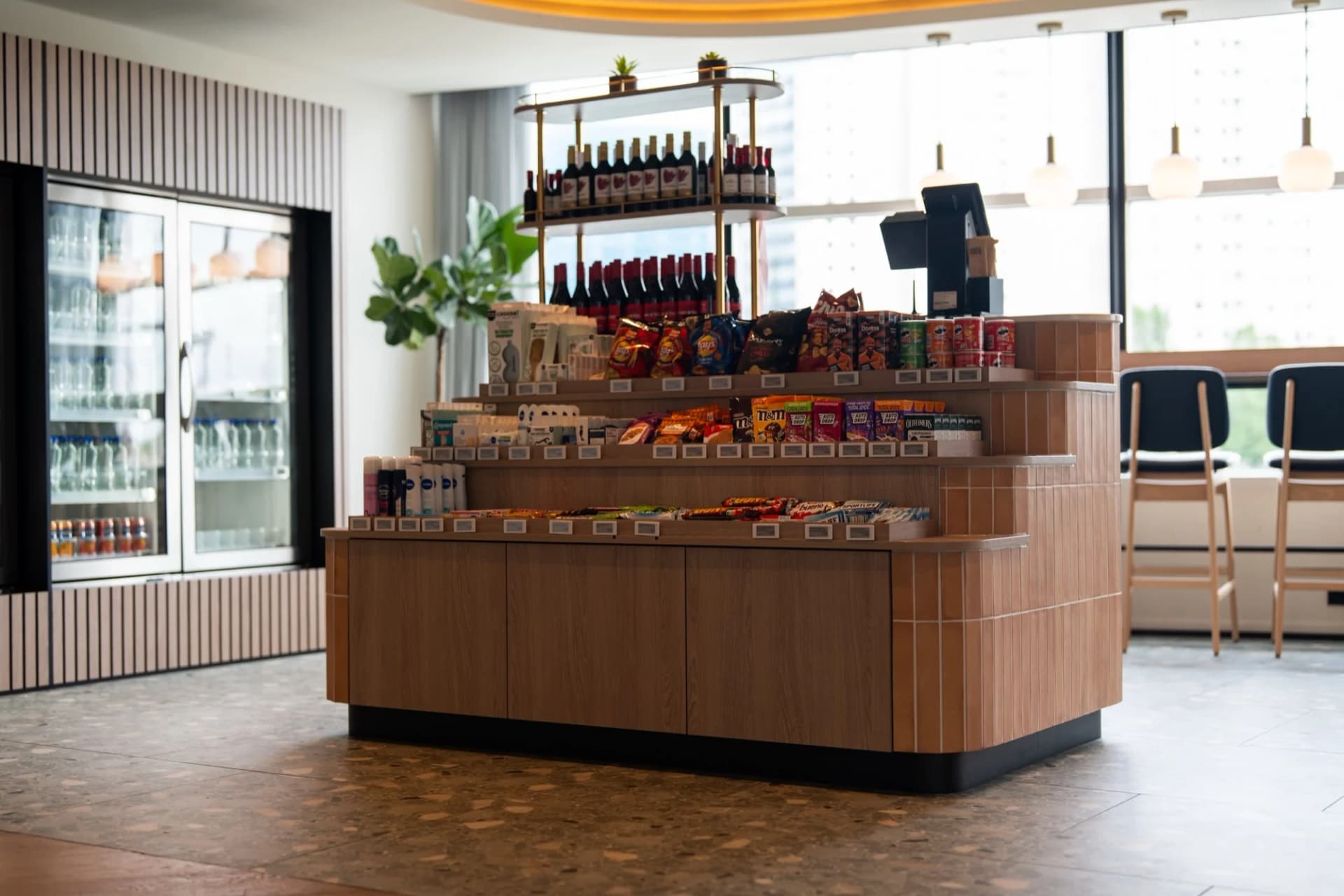
An open lobby shop, vending machine and smart fridge differ in how guests browse, select and pay for products. This guide compares the three formats by range, available space, daily management and financing, helping you choose a self-service solution for your hotel.
Three ways to offer food and drink without a staffed till
Vending machine: products dispensed from a closed unit
The guest selects a product, pays and collects it from the machine. A snack vending machine, drinks machine or combination unit can provide a focused range in a compact space. Modern vending can also support chilled meals and contactless payment. The available options depend on the model, packaging and configuration.
Open lobby shop: choose from shelves and fridges
An unmanned hotel shop, also known as a lobby shop or micro market, combines retail space with a self-service checkout. Guests can look closely at products, read labels and pay for their selection. A hotel mini market can therefore accommodate breakfast items, snacks, drinks and travel essentials. Its layout can be designed around the interior and guest routes.
Smart fridge: chilled products with controlled access
With a smart fridge, guests follow the system's payment and access instructions to open the door and select products. How purchases are registered varies by model. This can suit a chilled grab-and-go offer in a limited space. A smart cooler can stand alone or form part of a larger hotel convenience store.
1. Product range: what do your guests actually want to buy?
Compare a specific product list. Vending is not limited to soft drinks and confectionery; some machines also offer fresh food. Product dimensions, packaging and the dispensing mechanism must work together. An open hotel shop allows more freedom to display different product formats alongside one another. A smart fridge focuses on items that fit its refrigerated setup.
Distinguish a quick snack from breakfast to go, a light meal or a forgotten travel item. An airport hotel may have different priorities from a city hotel or conference venue. Consider shelf life and stock turnover too: extra choice helps when products remain available and sell in time. Match the initial range and later adjustments to your guest profile.
2. Guest experience: choosing, paying and finding help
A hotel vending machine offers a clear route to an individual product. In an open lobby shop, guests can compare and combine several items, such as breakfast and a drink. With a smart fridge, guests need to understand how opening, choosing and payment work. Ask someone unfamiliar with the system to complete a purchase before opening.
Clear prices, readable product information and reachable controls matter in every format. Check payment methods, receipt access and help when a purchase fails. Room charging depends on the equipment and integration with the hotel's property management system. A 24-hour hotel shop also needs access arrangements for times when the main entrance or reception is closed.
3. Space and appearance in the hotel lobby
Measure the whole area in use, including open doors, people at the checkout, luggage and replenishment routes. A compact vending machine may suit a location with little available floor space. An open micro market needs a suitable arrangement of shelves, fridges and checkout. A smart fridge sits between closed dispensing and an open shop in how it is used, but its door still needs clearance.
Decide how the installation fits your hotel concept. A lobby shop can become a visible part of the interior; a vending machine can also be carefully positioned and finished. Check lighting, power, connectivity and ventilation with the supplier. Consider guests with limited mobility and keep the shop clear of reception queues and important passageways.
4. Operation: the service package determines the workload
An unattended store does not need a staffed till, but products still need replenishing and equipment needs maintenance. That is equally true of vending machines. Fully managed service and sales monitoring are not exclusive to open micro markets. Compare the service offered alongside the equipment.
Selecta takes full responsibility for running the shop: replenishment, daily quality and expiry checks, cleaning and maintenance are standard services. Its own staff visit every day, seven days a week, and more often when needed. Selecta schedules these visits itself, independently of product suppliers’ delivery or visit schedules, to keep shelves stocked. Selecta checks stock, shelf life, refrigeration and shop presentation every day. Sales data and guest needs inform ongoing range improvements. The focus is maximum sales with a high service standard: maintaining product availability and continually improving the offer.
- Replenishment: Selecta’s own staff refill daily, seven days a week, and more often when needed.
- Quality: daily checks, shop cleaning and maintenance are included as standard.
- Range: Selecta uses sales data and guest needs to improve availability and sales.
- Comparison: check which duties and costs sit with the provider or hotel under other operating models.
5. Revenue: up to 10× more than traditional F&B vending
A Lobby Market can generate up to 10× more revenue than traditional food and beverage vending. A broader offer and the ability to buy several products together create additional sales opportunities. How much your hotel captures depends on factors including occupancy, visibility, product range, pricing and other food and drink options.
New purchase occasions and additional categories can capture spending your hotel previously missed: food after the kitchen closes, something for the journey or a forgotten toiletry. These complement existing F&B. A purchase moving from a minibar or bar is not automatically new demand. Assess total hotel income, including the shop’s agreed revenue share, and compare periods with similar occupancy and guest mix.
Use the hotel shop revenue calculator for an initial indication. Compare it with your current vending sales and ask the proposal to show clearly what remains for your hotel after the agreed revenue split and costs.
6. Financing: no own capital required, with options to invest
Your hotel does not need to provide its own capital for a Lobby Market. Selecta can work with you on flexible financing options tailored to your hotel or hotel group. This allows you to develop a hotel shop while keeping your available capital for other priorities. The layout, service and financial arrangements are developed together in a proposal for your property.
If you prefer to invest, contributing your own capital creates scope for more attractive terms, such as a higher revenue share and/or a shorter contract term. Discuss which combination of contribution, revenue share and duration best matches your goals. An independent hotel may have different priorities from a client planning a rollout across several locations.
Selecta bears the cost of this standard shop operation within the revenue-share model. The hotel receives an agreed percentage of sales, with no separate bill for routine replenishment, daily checks, shop cleaning and maintenance. You provide the space and electricity. Any building works or own-capital contribution are discussed separately.
Which solution fits your hotel?
- Compact hotel with a focused need: consider snack or drinks vending when demand centres on a few product categories.
- Hotel needing chilled products in limited space: explore a smart fridge with a range matched to expected sales.
- Hotel serving several purchasing occasions: consider a lobby mini market for breakfast, snacks, meals and travel essentials in one place.
- Hotel with multiple buildings or guest routes: consider combining a central lobby shop with vending elsewhere.
A self-service hotel shop can be an alternative to vending or a complement to existing facilities. Assess each location for access, demand and operation. A larger solution is useful when it fits the service you want to offer and the way guests use your hotel.
Deciding whether to retain in-room facilities needs a separate assessment: keeping minibars or replacing them with a hotel shop.
A decision checklist for your hotel shop or vending machine
- Describe the guest needs you want to meet and at what times.
- Compare the solutions against the same desired products and payment methods.
- Assess the usable space and test the route with luggage.
- Request a breakdown of operation, hotel tasks and service arrangements for each option.
- Compare financing without your own capital with a hotel investment, including revenue share and contract duration.
- Agree how to review sales, availability, waste and guest feedback after opening.
Explore the steps towards a Lobby Market tailored to your hotel to prepare for a site assessment. Discuss your priorities and have the range, design, operation and financing developed as one proposal. The supplier-selection guide linked below this article will help you assess the offer.
Frequently asked questions about lobby markets and vending
What is the difference between a micro market and a vending machine?
In an open micro market, guests choose products from shelves and fridges and pay at a self-service checkout. A vending machine dispenses the selected items. The main difference is how products are presented and chosen; the assortment and service depend on the solution selected.
Can hotel vending machines sell fresh meals?
Yes, suitable refrigerated machines can offer fresh products. Check which packaging and items fit the model and how cooling, expiry checks and replenishment are organised. Fresh food is not exclusive to an open lobby shop.
When is a smart fridge a suitable alternative?
A smart fridge can suit a compact, chilled grab-and-go offer. Assess the space, product selection and payment process. It can be installed on its own or as part of a larger self-service store.
Can a Lobby Market generate up to 10× more revenue?
Yes, a Lobby Market can generate up to 10× more revenue than traditional F&B vending. The outcome for your hotel depends on its location, guests, occupancy and the offer. Revenue is different from the final revenue share or return to the hotel.
Does a Lobby Market require the hotel's own capital?
No, your own capital is not required. Selecta can develop flexible financing options tailored to your hotel. An investment using your own capital creates scope for more attractive terms, such as a higher revenue share and/or shorter contract duration. Your proposal sets out the chosen combination.
Who restocks the lobby shop or vending machine?
Selecta provides this as standard through its own staff, every day, seven days a week, and more often when needed. Replenishment, daily checks, cleaning and maintenance are included in the fully managed Lobby Market. The hotel does not need to carry out these shop duties.
Must existing vending machines go when we open a lobby shop?
Not necessarily. A shop in the main lobby can work alongside vending near meeting rooms or in another building. Assess demand at each location and whether the combined operation is practical to manage.