
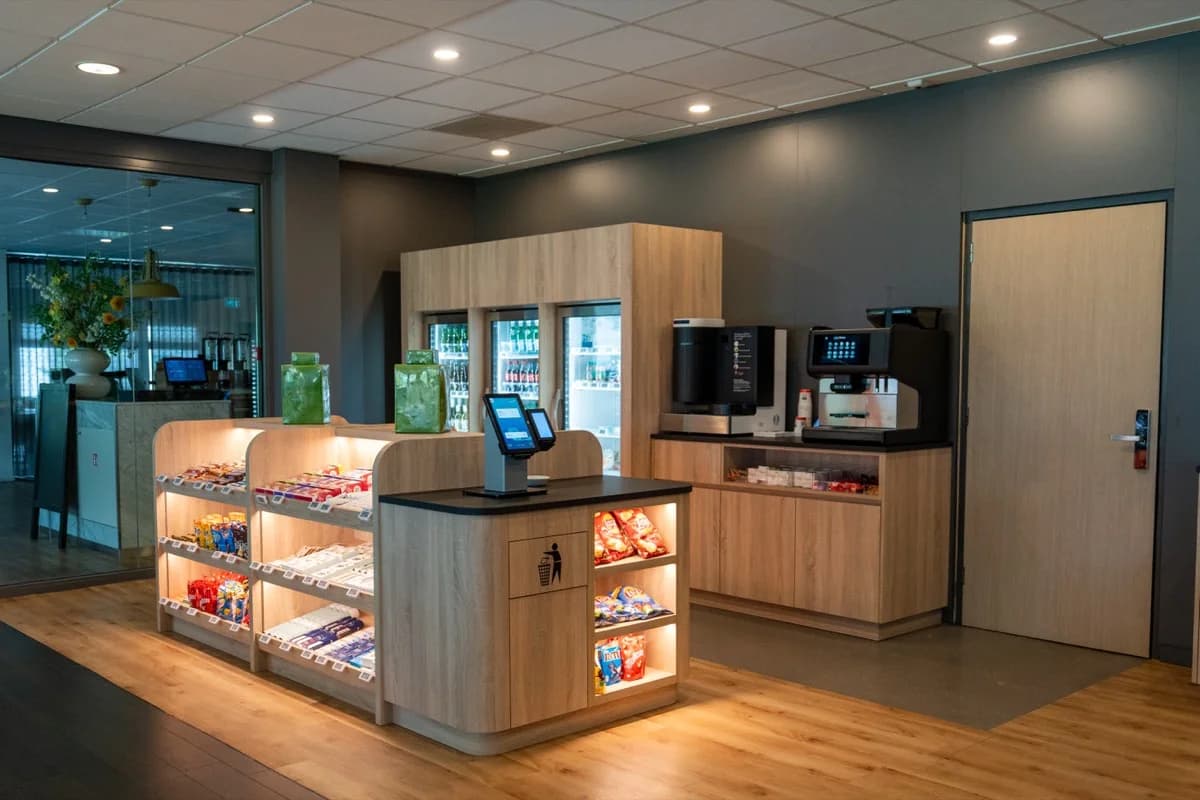
Choosing an unattended hotel shop starts with comparable proposals. Define the desired format, guest needs and expected service level. Ask each provider explicitly which tasks they perform and which remain with the hotel. This lets you compare the full operation of a lobby shop, rather than just equipment or a sales forecast.
Compare providers on the same brief
A quote for a smart fridge alone is not equivalent to a fully managed mini market. Ask each provider to specify the fittings, product supply, payment handling and support included. Use the same location, intended opening hours and product categories in every proposal.
Unsure which format to choose? Read the overview of hotel micro markets and self-service shops.
When comparing a hotel convenience store, a self-service kiosk or a vending machine, ask to see the complete purchase process. Can guests choose products directly, do they need an app, and what happens if payment fails? Selecta's Lobby Market is the offer described on this website; the equipment and operating arrangements are set out in the proposal for your hotel.
Question 1: who invests, and which costs remain with the hotel?
Separate buying or leasing equipment from a managed service with revenue sharing. Ask who owns the installation, finances the stock and pays for maintenance. Compare any hotel contribution, recurring charges, payment fees and utilities over the contract period. A proposal with no initial equipment purchase can still leave costs with the hotel.
No own capital is required for a Lobby Market. Selecta can develop flexible financing tailored to your hotel or hotel group. An own-capital contribution creates scope for more attractive terms, such as a higher revenue share and/or shorter contract duration. Selecta bears the cost of this standard shop operation within the revenue-share model. The hotel receives an agreed percentage of sales, with no separate bill for routine replenishment, daily checks, shop cleaning and maintenance. You provide the space and electricity. Any building works or own-capital contribution are discussed separately.
Question 2: who runs the hotel shop each day?
Ask who orders and replenishes products, checks expiry dates, cleans the equipment and handles waste or missing stock. A dashboard helps organise these jobs, but does not do them. Write down which tasks belong to the supplier and which remain with reception, housekeeping or food and beverage staff.
Selecta takes full responsibility for running the shop: replenishment, daily quality and expiry checks, cleaning and maintenance are standard services. Its own staff visit every day, seven days a week, and more often when needed. Selecta schedules these visits itself, independently of product suppliers’ delivery or visit schedules, to keep shelves stocked. Selecta checks stock, shelf life, refrigeration and shop presentation every day. Sales data and guest needs inform ongoing range improvements. The focus is maximum sales with a high service standard: maintaining product availability and continually improving the offer.
Question 3: what happens when a fridge or checkout fails?
Ask how faults are detected, who receives alerts and how repair requests are prioritised. Distinguish the hours when support can be contacted from the time within which a technician will arrive. Have the arrangements for refrigeration, checkout and connectivity written into the service agreement, including any exclusions.
Walk through a realistic evening incident: a guest has paid but cannot complete the purchase. Who helps the guest, processes a refund and records the issue? Agree how products are handled if cooling is interrupted. These details matter when a 24/7 hotel shop is meant to provide a service after the restaurant closes.
Question 4: does the assortment suit your guests?
Start with guest needs rather than a standard product list. Early departures may need breakfast to go; late arrivals may want a meal; families may look for snacks or forgotten toiletries. Decide which needs your existing food and beverage offer already covers and which the lobby store should meet.
Ask how sales, waste and guest feedback will influence the assortment after opening. For fresh meals, discuss refrigeration, shelf life and any heating equipment needed. For grab-and-go food, check that packaging, product information and the route from the shelf to payment are clear. Confirm which products are available for your location.
Question 5: will the mini market fit the lobby?
Request a layout showing shelves, refrigeration, checkout and space for guests carrying luggage. Check visibility from the main walking route, accessible use, deliveries, power and connectivity. A compact unit and a larger shop-in-shop have different requirements; the available floor area alone does not decide which will work.
Ask for photographs of comparable installations and discuss materials, lighting and signage. Consider equipment noise near seating or work areas. Include the route used for restocking in the design review. The aim is a hotel lobby shop that guests can find and use comfortably, while fitting the existing interior and daily operation.
Question 6: how do payment and age checks work?
Test the proposed self-checkout with the payment methods your guests use. Ask whether an app or account is required, how receipts and refunds work, and what happens during a connection failure. If you want room charging, confirm compatibility with your property management system (PMS), setup requirements and responsibility for reconciling transactions.
For age-restricted products, agree the required checks for the country and location before choosing the assortment. Ask which verification methods the proposed system supports and what hotel involvement remains. A feature available in one installation is not automatically included in another. Have payment options, integrations and additional charges confirmed in the proposal.
Question 7: which figures can the hotel review?
Request a sample report showing shop sales, the hotel's share, refunds and any agreed deductions. Confirm how often reports and payments arrive and who can access the data. Ask whether performance can be reviewed by product and time period, so that assortment decisions can be discussed using the same figures.
Use the hotel shop revenue calculator for an initial indication based on your room count, occupancy and location. Compare that estimate with the actual commercial proposal. After opening, review sales alongside service quality, waste and the hotel team's workload to assess whether the arrangement meets your objectives.
Question 8: what is the implementation and contract plan?
Confirm the contract duration, renewal terms and arrangements for changes or removal of the installation. Clarify what accepting the proposal commits you to and which preparatory work the hotel must complete. A launch plan should include equipment delivery, payment testing, staff briefing and clear information for guests.
The planning and installation process on this website uses around eight weeks as a guide. Agree the actual timetable after reviewing your location, equipment and preparations. Before opening, record how unresolved issues will be handled and schedule a review of the assortment, sales and guest experience.
A practical checklist for comparing suppliers
- Investment: ownership, financing, hotel contribution, recurring charges and utilities.
- Operation: replenishment, cleaning, expiry checks, waste and the hotel's remaining tasks.
- Service: fault alerts, support hours, repair arrangements and refunds.
- Assortment: guest needs, fresh products, toiletries and ongoing review.
- Design: guest routes, accessible use, deliveries, power and connectivity.
- Payment: supported methods, PMS compatibility and any age checks.
- Reporting: sales, hotel income, deductions and payment frequency.
- Contract: duration, exit arrangements, preparation and opening schedule.
Frequently asked questions about choosing a hotel shop
Is a lobby shop the same as a micro market?
The terms overlap. Lobby shop describes where the shop is located; micro market describes a small retail format that can combine shelves, refrigeration and self-checkout. Check the equipment, assortment and operating agreement in each proposal rather than relying on the name.
Does grab-and-go require a full mini market?
No. Grab-and-go describes a quick purchase to take away. The right setup might be a compact smart fridge, an open shop or a counter. Compare guest demand, available space, product range and the work involved in operating each option.
Does an unmanned hotel store mean no work for the hotel?
Selecta provides this as standard through its own staff, every day, seven days a week, and more often when needed. Replenishment, daily checks, cleaning and maintenance are included in the fully managed Lobby Market. The hotel does not need to carry out these shop duties.
Which costs should I compare between suppliers?
Compare the investment, financing, ongoing charges, utilities and responsibilities for stock and waste. For revenue sharing, check the hotel's share and any deductions. Evaluate the expected result for the hotel over the contract period, rather than comparing total shop sales alone.
Can guests charge purchases to their room?
That depends on the proposed payment system and compatibility with your hotel's PMS. Confirm the integration, setup, reconciliation process and any charges before including room charging in guest information. Availability should be stated in the proposal for your location.
Can the shop sell alcohol without a cashier?
Discuss the intended assortment and applicable local requirements with the supplier before including age-restricted products. Confirm which verification method is supported and what responsibilities remain with the hotel. The term self-service alone does not establish whether a particular sale is permitted.
How long does installation take?
This website gives around eight weeks as an indicative planning and installation period. The agreed schedule depends on the equipment, site preparation and location. Ask for milestones, responsibilities and acceptance checks so that the opening date is based on your specific project.