
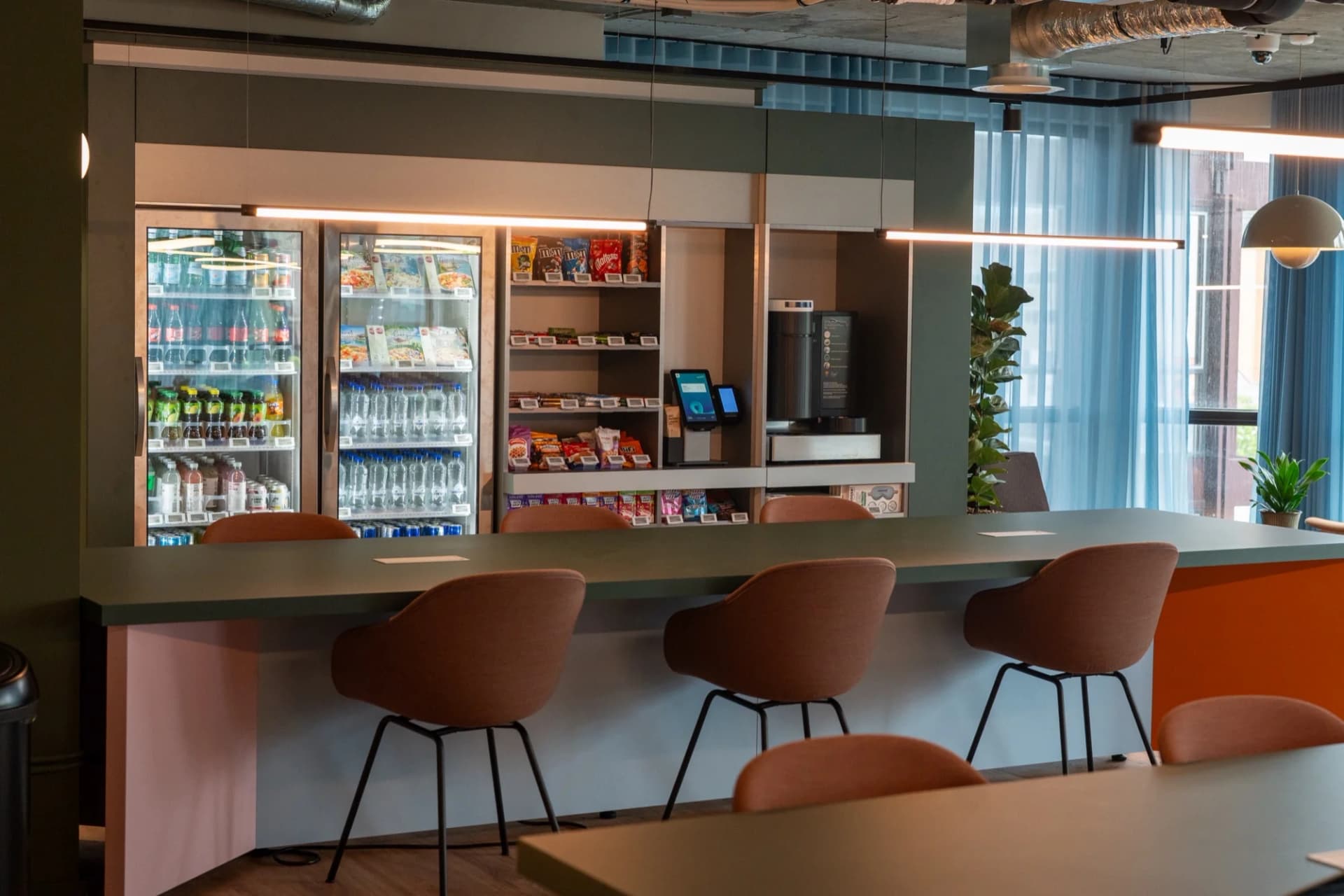
Choosing a room service alternative means choosing a different service, not just another sales point. Does the guest expect delivery to the room, or is choosing and collecting products in the lobby appropriate? This guide helps you decide when to retain delivery and when a self-service hotel shop can complement your offer.
Self-service pickup and room service are different
With room service, a guest orders food or drinks for delivery to their room. In a lobby shop, guests choose, pay and carry their purchases themselves. A 24-hour hotel shop can provide food outside kitchen hours, but it does not automatically replace personal service, made-to-order cooking or delivery.
Terms such as hotel convenience store, mini market, micro market and grab-and-go describe ways to offer food and drinks in the lobby. Define the guest experience before choosing the equipment. A hotel promising in-room dining has a different brief from one primarily seeking a convenient option for late check-in.
Keep, limit or complement room service?
Keep delivery where guests value it
Does personal service support your positioning, and do guests book specifically for that experience? Retain delivery to the room during hours when you can provide it well. A hotel shop can handle smaller purchases alongside it, such as water or a snack, without turning every purchase into a kitchen order.
Review hours with little demand
Analyse orders by time of day before changing availability. You could offer room service during dinner hours and direct guests to self-service afterwards. Explain in advance when the kitchen closes and what remains available. A limited overnight menu is another option, provided preparation and delivery are actually covered.
Add food to a hotel without a restaurant
An unattended hotel shop can add a basic food offer to a hotel without a restaurant. Check whether the selection meets guests’ expectations: a quick snack and an evening meal are different needs. Consider nearby restaurants, external delivery options and access to the lobby as part of the decision.
When does delivery to the room still matter?
Review booked packages, room categories and existing room service orders. If delivery is part of your guest promise, a lobby shop does not provide the same service. Consider whether guests can easily leave their room and whether the requested meal needs preparation and delivery. Then choose room service, self-service collection or a combination for each service period.
For information and assistance with late arrivals and early departures, see guest experience after hours.
Choose a range that goes beyond snacks where needed
Self-service hotel catering can include chilled drinks, sandwiches, salads, breakfast items and heat-to-eat meals. The actual selection depends on local availability, refrigeration and likely sales. Start with a manageable range and adjust it using purchase patterns and recurring guest requests; a larger range is not automatically a better one.
If you want hot food without keeping a staffed kitchen open, discuss suitable ready meals and heating equipment. Check portions, preparation time, clear instructions, cutlery and cleaning. A microwave does not turn a lobby market into a restaurant cooking dishes to order.
Make product and allergen information available and check which dietary needs the range can genuinely accommodate. Selecta checks stock, shelf life, refrigeration and shop presentation every day. Sales data and guest needs inform ongoing range improvements. The focus is maximum sales with a high service standard: maintaining product availability and continually improving the offer.
Daily shop operations handled by Selecta
Your hotel does not need to hire shop staff or organize replenishment, daily shop checks, cleaning and maintenance. Reception can direct guests to the shop and pass questions or faults to Selecta. A hotel contact discusses preferences and exceptional situations; Selecta runs the daily shop operation.
Selecta takes full responsibility for running the shop: replenishment, daily quality and expiry checks, cleaning and maintenance are standard services. Its own staff visit every day, seven days a week, and more often when needed. Selecta schedules these visits itself, independently of product suppliers’ delivery or visit schedules, to keep shelves stocked.
Explain the service before guests arrive
Use your hotel website and arrival email to explain what guests can buy outside restaurant hours, where the shop is and how payment works. For example, describe ‘24-hour snacks and selected meals in the lobby’ if that matches the actual offer. Use room service to describe a service that includes delivery to the room.
Check the route to the shop, access to shelves and the payment terminal, readable prices and instructions international guests can understand. Agree how to help someone unable to reach the lobby independently. Contactless payment and charging purchases to the room are separate features: confirm supported payment methods and any property management system integration in advance.
Compare the cost of the complete service
For room service, include ingredients, preparation, order handling, delivery, washing up and staffing. For the Lobby Market, Selecta runs daily shop operations within the revenue-share model. The hotel assesses its revenue percentage, space, electricity and any own-capital contribution. Also compare what guests receive for the price: self-service pickup and personal delivery are different services.
New purchase occasions and additional categories can capture spending your hotel previously missed: food after the kitchen closes, something for the journey or a forgotten toiletry. These complement existing F&B. A purchase moving from a minibar or bar is not automatically new demand. Assess total hotel income, including the shop’s agreed revenue share, and compare periods with similar occupancy and guest mix.
Use the hotel revenue calculator for an initial indication of possible shop turnover. Then request a proposal reflecting occupancy, guest profile, service hours and how costs and income are shared. The calculator does not replace a comparison of net results.
Financing designed around your hotel
No own capital is required for a Lobby Market. Selecta can develop flexible financing tailored to your hotel or hotel group. An own-capital contribution creates scope for more attractive terms, such as a higher revenue share and/or shorter contract duration.
Selecta bears the cost of this standard shop operation within the revenue-share model. The hotel receives an agreed percentage of sales, with no separate bill for routine replenishment, daily checks, shop cleaning and maintenance. You provide the space and electricity. Any building works or own-capital contribution are discussed separately.
Checklist for an overnight food offer
- Identify the occasions you want to serve and which guests expect delivery to their room.
- Define when room service remains available and what guests can buy outside those hours.
- Check the range, refrigeration, heating options, accessibility and payment methods.
- Confirm Selecta’s daily service, seven days a week and more often when needed, together with the hotel contact and route for exceptional guest requests.
- Compare costs, hotel income and financing terms using realistic occupancy scenarios.
- Brief guests and staff, then review sales, availability, waste and requests for help after opening.
See how Selecta plans and sets up your lobby shop to turn these choices into a proposal for your property. Agree a realistic opening schedule and review whether the lobby shop complements your service as intended.
Questions about room service alternatives
Can a lobby shop replace room service completely?
That depends on the service your hotel promises. A lobby shop offers self-service pickup and payment; room service includes delivery to the room. Where guests expect personal service, the shop may work better as a complement than as a complete replacement.
Can I keep room service alongside a 24-hour hotel shop?
Yes. You can retain delivery during selected hours and offer snacks, drinks and suitable meals in the lobby at other times. Clearly communicate opening hours, the available range and whether any delivery service is included.
Is a mini market suitable for a hotel without a restaurant?
A mini market can add a food offer, but suitability depends on demand, space, guest expectations and the range. Establish whether you mainly need snacks or also need an option that guests can use as a meal.
Can guests have hot food when the kitchen is closed?
Suitable heat-to-eat meals and equipment can make this possible if included in the agreed setup. Define instructions, cleaning and product management. This is different from a chef preparing a hot dish to order.
Does a lobby shop need additional night staff?
Selecta provides this as standard through its own staff, every day, seven days a week, and more often when needed. Replenishment, daily checks, cleaning and maintenance are included in the fully managed Lobby Market. The hotel does not need to carry out these shop duties.
Does the hotel need to invest its own capital?
No own capital is required for a Lobby Market. Selecta can discuss suitable financing. An own-capital contribution can provide more attractive terms, such as a higher revenue share and/or shorter contract duration. Costs and arrangements are tailored to your hotel.
Can guests charge purchases to their room?
This depends on the chosen payment system and a supported integration with your hotel software. Confirm availability in advance. Only advertise payment options that actually work at your property.